The series
Through 2020 and 2021 Alija Kamber photographed his parents from the balcony while they stood at the ground-floor window below him. Contact was prohibited by ordinance, so the distance between camera and subject was set by the state rather than by the photographer, and it did not vary. He repeated the shot daily for the duration.
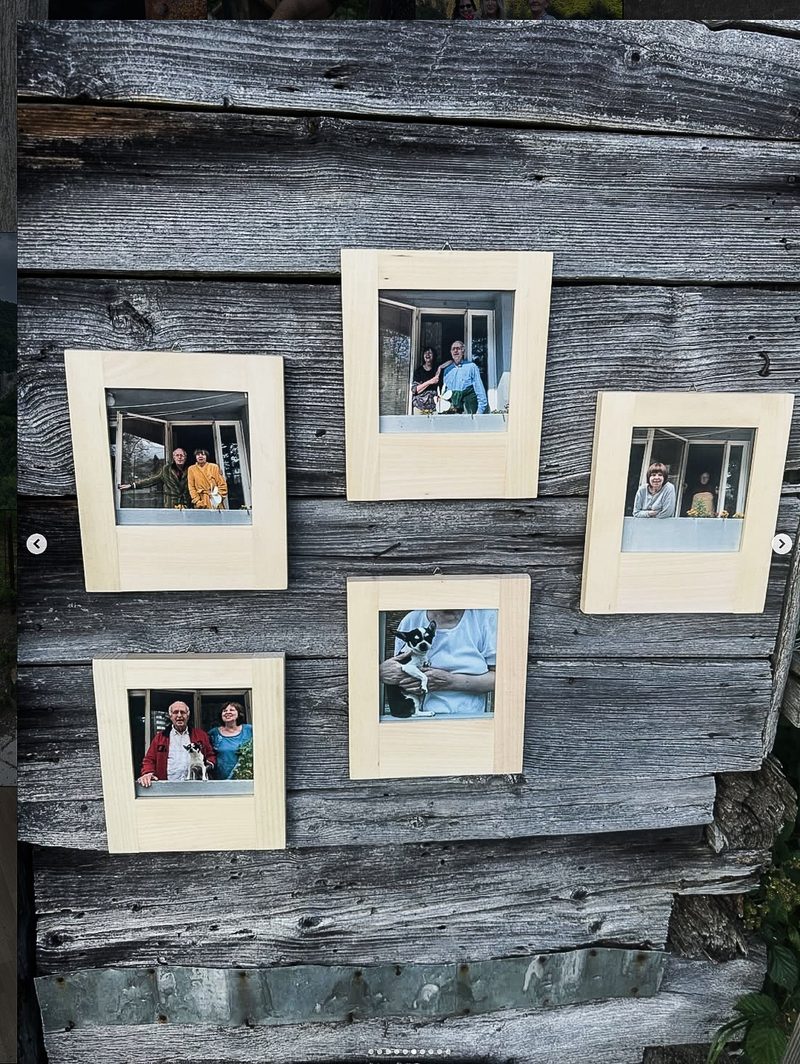
Photographed once, this is a snapshot: two people at a window, a dog lifted toward the lens, laundry on a line behind them, a good shirt put on before coming down. Photographed every day for two years from the same imposed distance, it becomes a record of what an ordinance does to two people over time. The vernacular of the family album is the material; the rule is the method.
The English title carries a second sense that the Bosnian does not. Relatives at a distance, and relatives held at one.
The siting
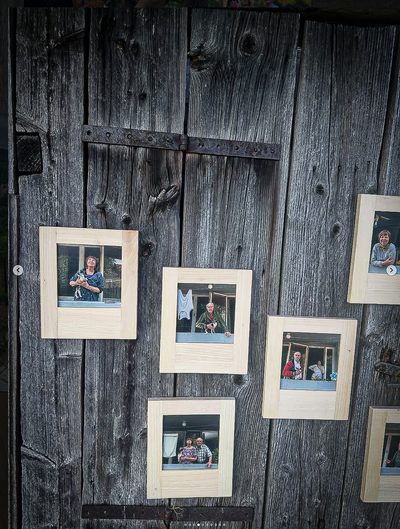
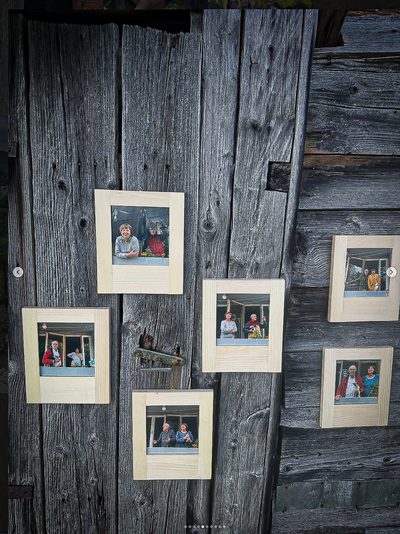
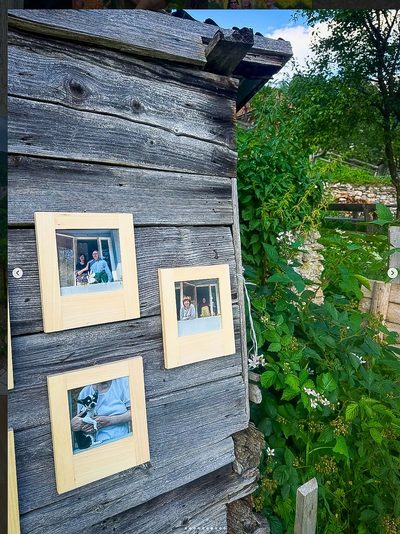
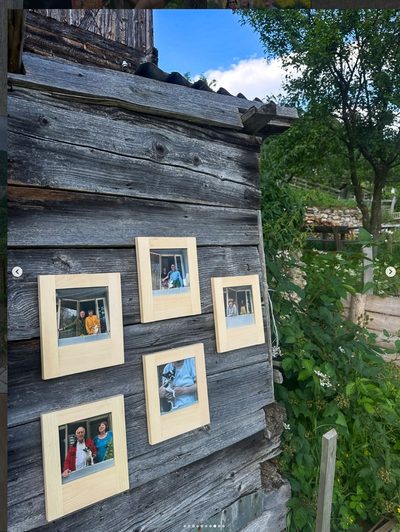
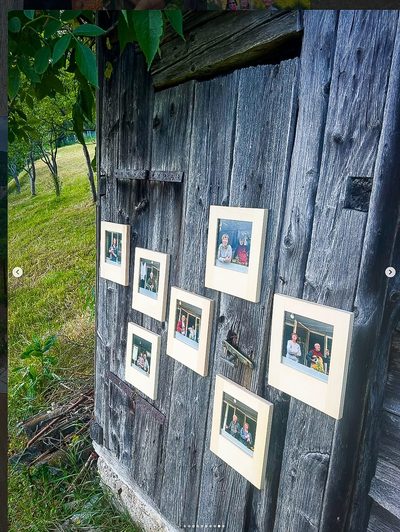
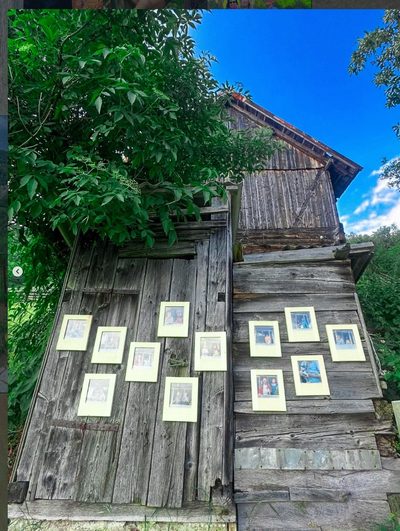
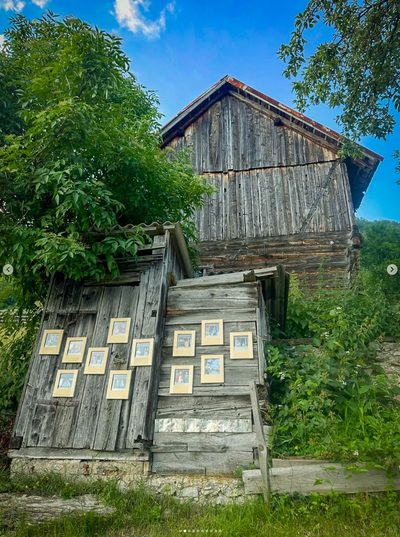
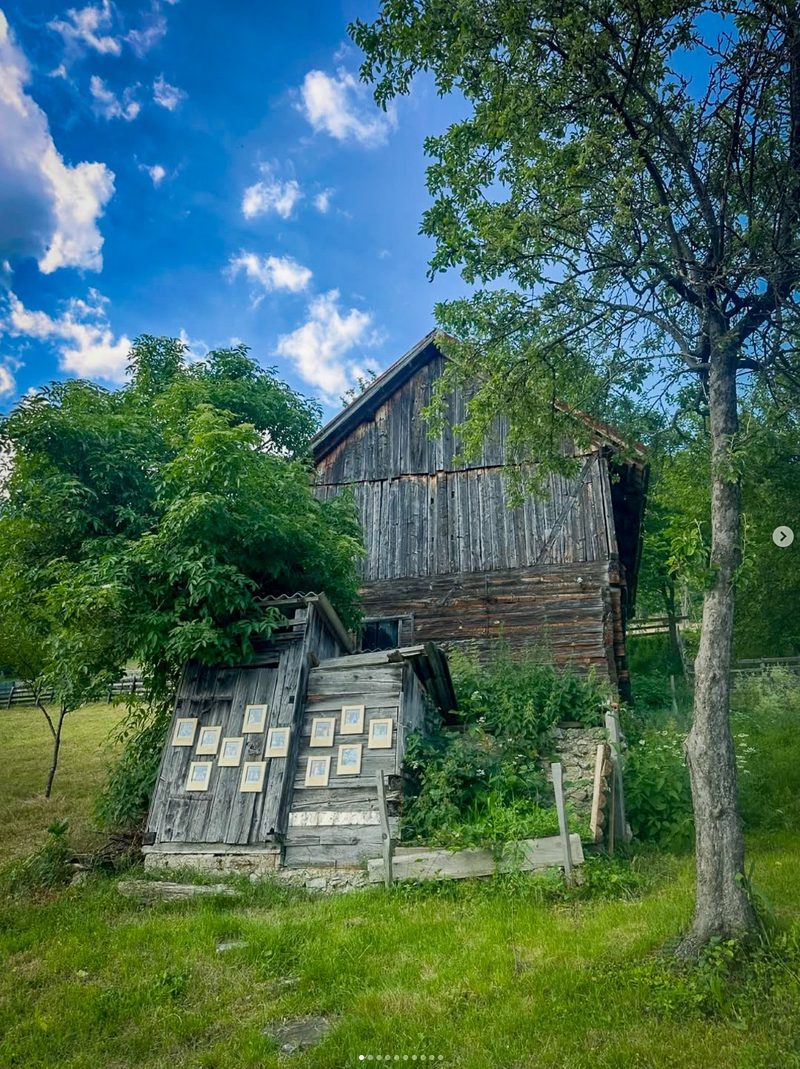
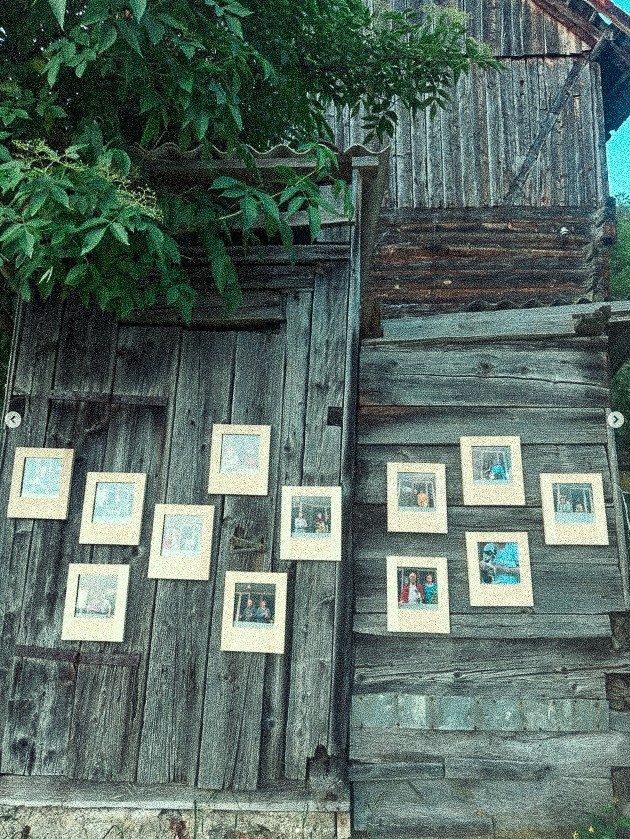
Twelve prints were hung in untreated pine frames, seven on the door of the wooden privy in the yard, locally the ćenifa, and five on the logs of the outbuilding beside it.
In a mountain household the privy is the only structure built for solitude. One enclosure, a latch on the inside, a function that admits no company and that requires leaving the house to perform. Portraits made under a quarantine order were fixed to the architecture that has always enforced a smaller, older and voluntary version of the same condition, and the two regimes run in opposite directions: the lockdown made going out the prohibited act, the privy makes going out the necessary one.
The two surfaces sit at the bottom of the yard, on a stone plinth, with a large old hay barn standing above and behind them. An elder grows over the roof of the privy and was in flower during the exhibition, the same species that was being gathered and dried that week for tea.
Nothing about the surface was neutralised for the occasion. The grey of the split boards runs behind the images, a forged hinge crosses the middle of the arrangement, and the frames are cut to the pictures rather than chosen to lift them off the wood. The exhibition claims no autonomy from the buildings it is fixed to, which is the condition under which most work is seen in a village and the condition under which almost none of it is written about.
The method behind the siting
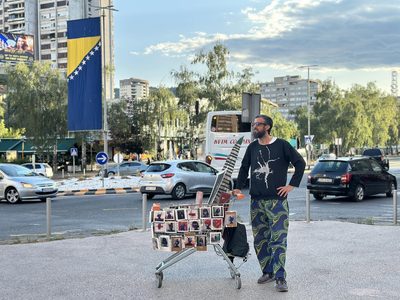
The decision was Kamber's, and it follows a method he arrived at a decade ago. Grundilo, the travelling gallery he has run since around 2015, has no premises: it borrows the wall of a host household for a few days, hangs, sells, and gives the wall back. → Artist page
The street-art sensibility he names as the ground of his practice, spontaneity, improvisation, and a reading of the surface being worked, transfers here from the sprayed urban wall to a weathered board in a village. He calls himself an artist without a career. Jusuf Hadžifejzović, opening one of his exhibitions, called him the Evlija Čelebi of the modern age, and the description holds for the work as much as for the man: the pictures travel, arrive, hang where they are put, and move on.
Twelve prints, two surfaces