TEREN_SЛОЈЕVИ
A multi-year residency programme at Zvjezdane Staze interrogating the political economy of the present and its historical accumulations through sound as material and method.
Sound / Extraction / Memory
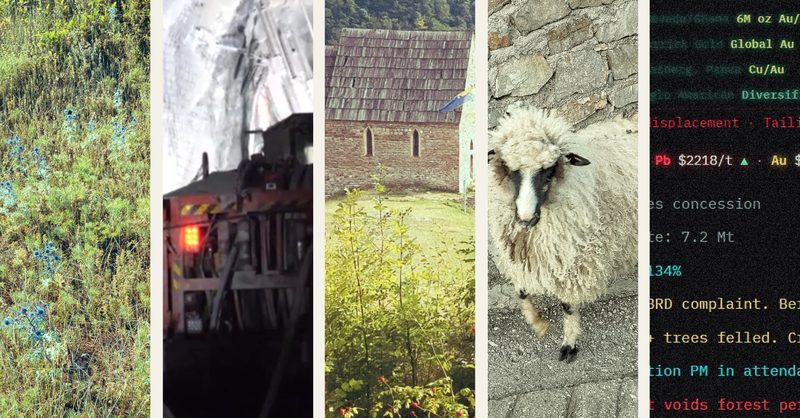
✦·TEREN_SЛОЈЕVИ⁰⁰¹·Δ26: Sound / Extraction / Memory is the first edition of a multi-year programme at Zvjezdane Staze in Mijakovići, Bosnia and Herzegovina, which interrogates the political economy of the present and its historical accumulations through sound as material and method.
Mijakovići, a remote mountain village in Bosnia and Herzegovina, lies opposite the ruins of Bobovac, the medieval royal seat of Bosnia, and is the working ground of the residency. A vernacular knowledge predates the residency and continues alongside it; the work takes place within this longer continuity. The municipality of Vareš, of which Mijakovići is part, is itself layered ground: the early Slavic presence, the Ottoman, Austro-Hungarian, and Yugoslav periods, the industrial accumulation and its destruction in the 1990s, and the interregnum administered in policy discourse as “transition” overlap there. The most recent layer is an extractive corporate operation drawing silver, lead, and zinc from the ground thirty kilometres away, in the same watershed that feeds tens of thousands of households downstream.
The work moves within the traditions of sonic ecology and deep listening without committing to a single method, holding the human, the non-human, and the technological on equal ground.
The resulting works are presented across the 2026/2027 season in Vareš, Vienna, and Sarajevo, in connection with Zvuчne Staze, a sound walk near Bobovac launching in June 2026.
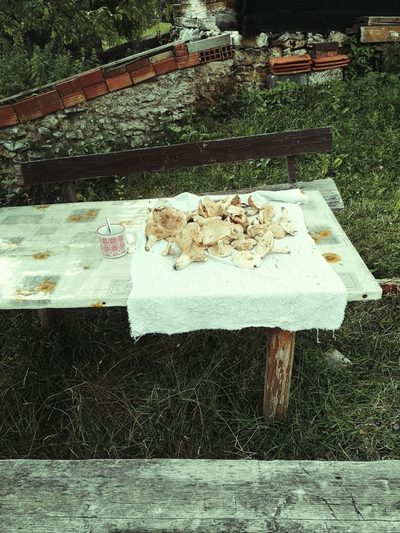
Zvjezdane Staze takes a professional and attentive practice as its premise. The format is built on shared living and working with two other artists in a small village; the work finds its form there.
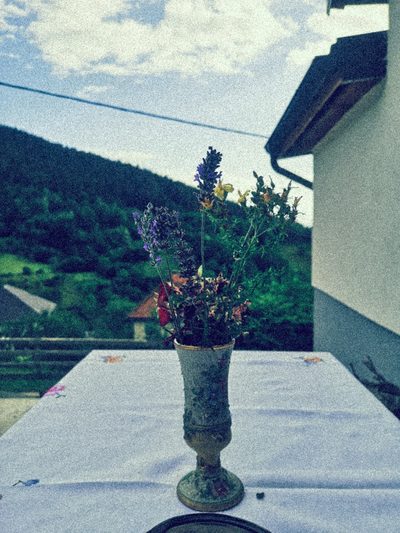
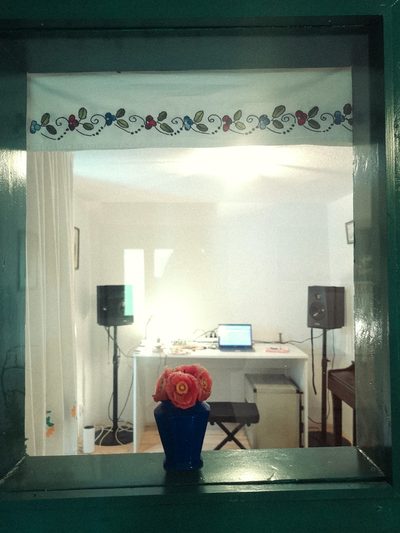
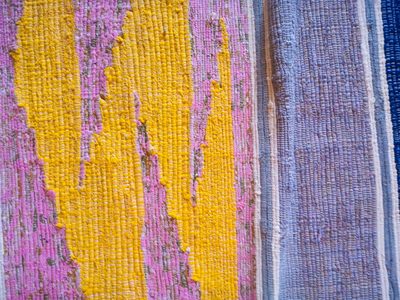
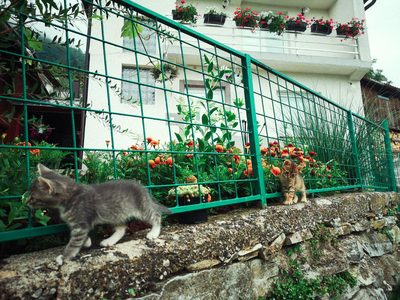
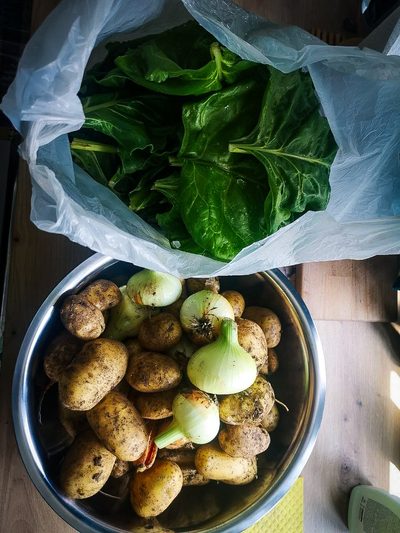
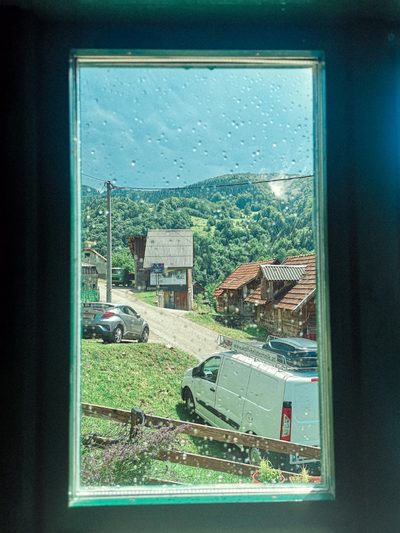
Photographs · Belma Bešlić-Gál
First edition · Sound / Extraction / Memory
- Petra Kapš (OR poiesis) Slovenia
- Markus Passecker Austria
- Yutong Zhang China
.png)
TEREN_SЛОЈЕVИ⁰⁰¹·Δ26 is funded by the European Union under the Culture Moves Europe programme, implemented by the Goethe-Institut. Views and opinions expressed are those of the author(s) only and do not necessarily reflect those of the European Union or the Goethe-Institut.