Beekeeping
Mijakovići · Vareš
Bees are kept in a number of households in Mijakovići. The sentence appears on several pages of this site, and this is where it is accounted for.
The account is Šaban Ibrišimović's. He lives next door to the residency, keeps around forty colonies, and spent nine years bringing the protected designation of origin for Vareš honey through the procedure. He wrote it down in June 2026, at our request, and it is given here in his own words, with the punctuation and the missing diacritics restored, and nothing else altered.
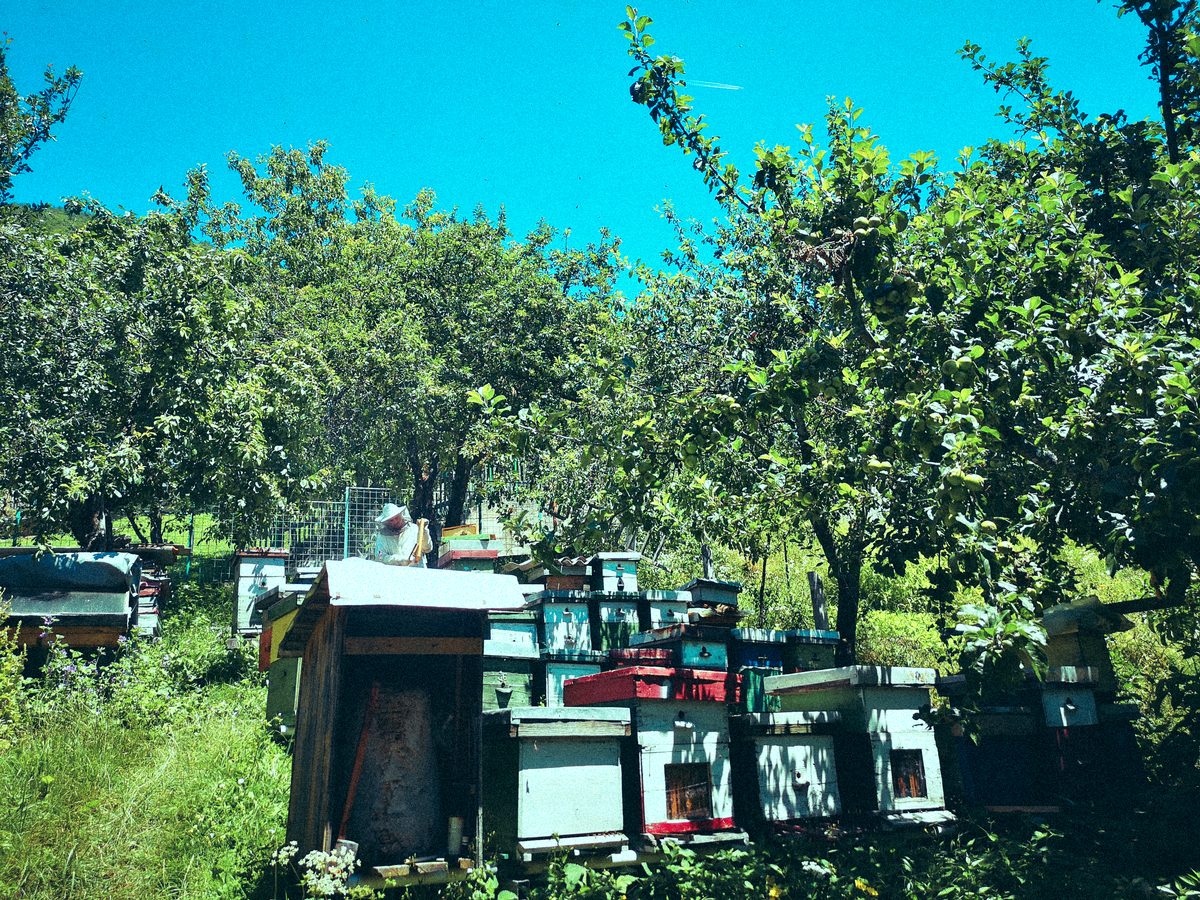
Two hundred years, three valleys
Bosanski · verbatim
Iz historijskog konteksta, moja porodica pčelari u kontinuitetu oko stotinu godina, i sa očeve i sa majčine strane. Ovdje se bilježe historijski podaci da je pčelarstvo bilo razvijeno oko dvjesto godina, i to na tri lokacije u Varešu. Jedna je baš ova Kraljeva dolina.
In his account, beekeeping in the Vareš area is documented over some two hundred years, at three locations. One of them is the Kraljeva dolina, the Royal Valley: the valley of Bobovac, below Mijakovići. His own family has kept bees for about a hundred years, on both sides.
A swarm in 1994
Bosanski · verbatim
Ja lično u kontinuitetu pčelarim preko trideset godina, od nekih ratnih godina. Sjećam se, bila je ratna gladna 1994. godina kada mi je otac poklonio jedan roj, i od tada sam pčelar. Imao sam nekada i preko sedamdeset košnica u sezoni.
A swarm given by his father in the hunger year of 1994 is the beginning of thirty years of beekeeping. At its largest the apiary ran to more than seventy hives in a season.
The designation
Bosanski · verbatim
Obzirom na ekološki čistu sredinu i jedinstven okus i posebnost naših planinskih medova, aktivnim bavljenjem pčelarstvom i kroz organe općinskog udruženja, prije devet godina pokrenuo sam inicijativu da zaštitimo ime i geografsko porijeklo. Nakon osam godina upornog rada zaštitili smo vareški med, i to dvije sorte, medljikovac i cvjetni med, tako da od prošle godine imamo zaštićenu oznaku imena i geografskog porijekla.
The initiative was raised nine years ago through the municipal beekeepers' association and took eight years. Two varieties are covered: medljikovac, honeydew honey gathered from forest, and cvjetni med, flower honey. By his account Vareš honey is the sixteenth food product in Bosnia and Herzegovina to be protected as a domestic autochthonous variety.
Medljikovac
Bosanski · verbatim
Medljikovci medovi su planinska vrsta medova koja potiče iz visokih četinarskih šuma, hrasta kitnjaka koji ovdje obitava, a ovaj med iritiraju lisne uši i u posebnim klimatskim uvjetima je njihovo medobranje te pripada vrsti najkvalitetnijih medova u Evropi i uvijek je najtraženiji med kod kupaca.
Honeydew honey is gathered not from flowers but from the secretions that aphids leave on the needles and leaves of the trees they feed on. In this valley the sources are the high conifer forest and the sessile oak. The flow depends on weather that does not come every year, so the harvest is irregular. The judgment in the last clause, that this is among the best honey in Europe and the one buyers want most, is his; it is set down here as the assessment of the beekeeper who brought the designation through, not as a measured fact.
Forty colonies, no wheels
Bosanski · verbatim
Danas sam pčelar sa nekih četrdesetak zajednica i pčelarim sa DB košnicama sa devet, deset i dvanaest ramova. Pčelarim stacionirano, ne nomadim sa pčelama. Mada se kaže kod pčelara, ako hoćeš puno meda moraš se popeti na točkove i tražiti obilne paše.
Forty colonies today, in Dadant-Blatt hives of nine, ten and twelve frames. The apiary is stationary. Migratory beekeeping moves hives to whatever is in flower, and yields more; staying put means taking the season the valley gives. The saying he ends on is the beekeepers' own, and he quotes it against himself.
Why this is on the site
Pčelarenje pred Kijamet was screened in Mijakovići on the solstice, 21 June 2026. The usual route of an ethnographic film about rural beekeepers runs to universities and festivals, where the audience knows nothing about bees. Here it came to a valley documented as beekeeping country for two centuries, and was watched by people who keep bees, one of whom had spent the previous nine years getting the honey of that valley onto a register. The conversation afterwards was between equals on the subject, which is rare enough to be worth recording.
Photographs
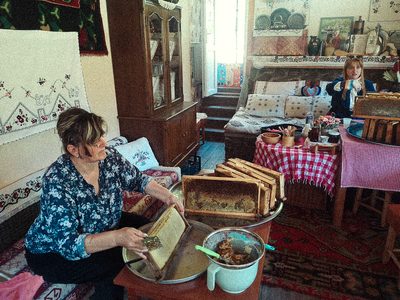
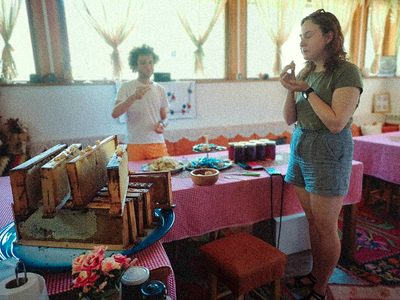
Fahrudin Ibrišimović's apiary · Mijakovići · June 2026
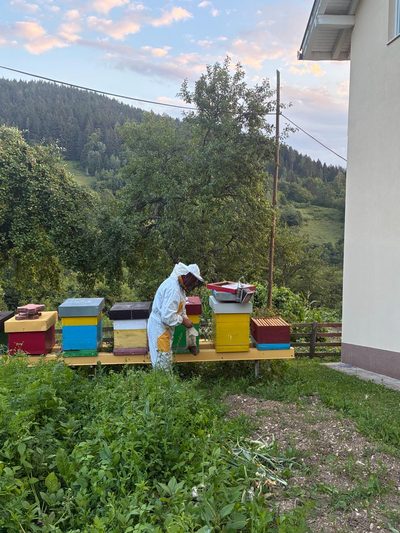
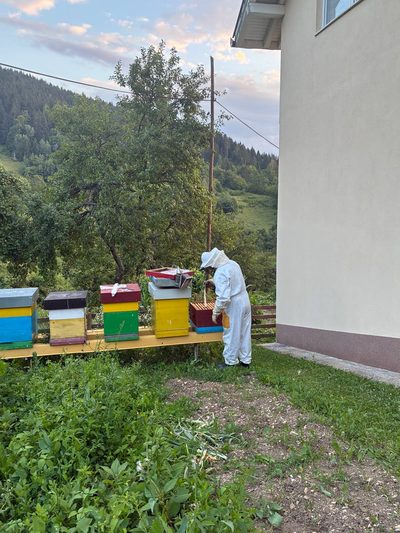
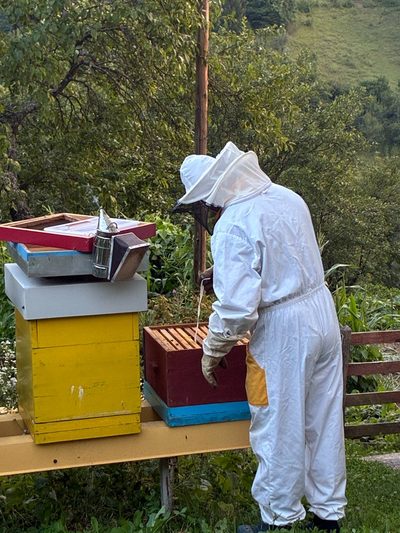
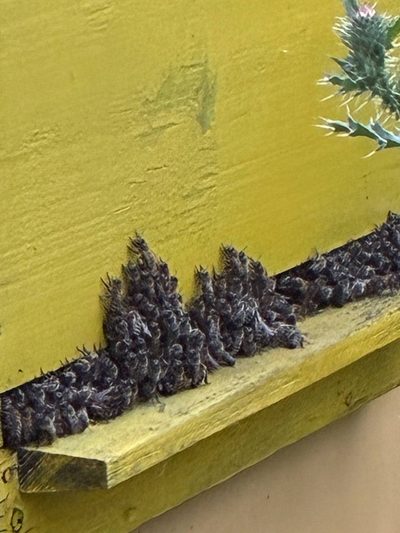
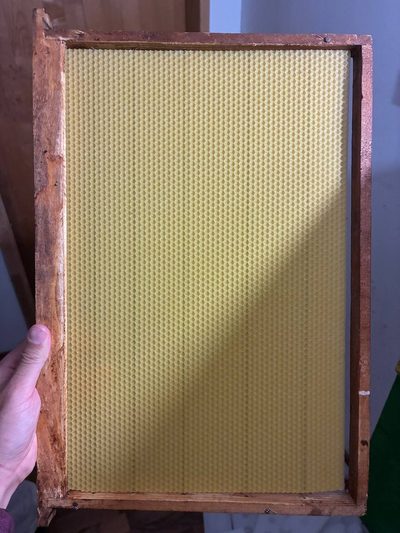
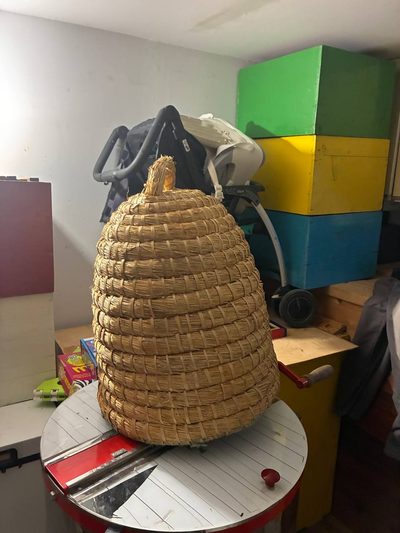
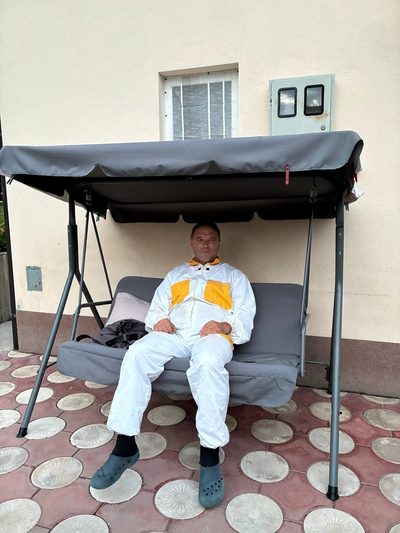
Photographs · Simon Shimizu
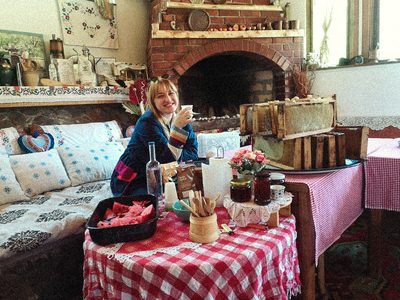
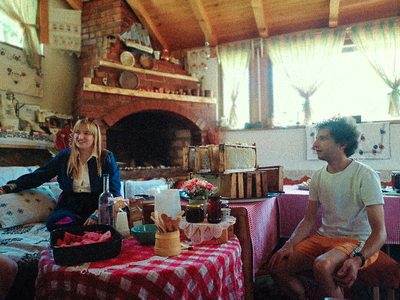
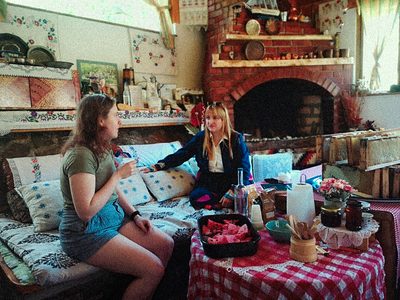
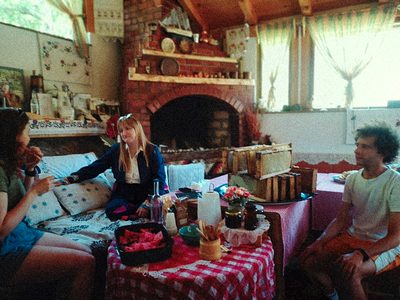
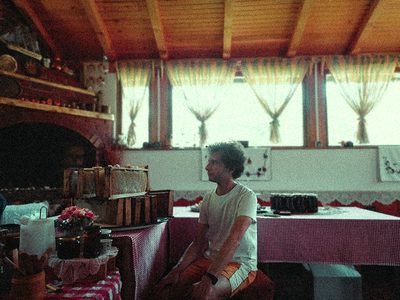
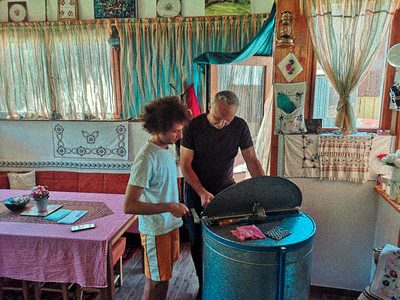
Tasting and extracting the honey at Šaban Ibrišimović's, with artists in residence, 2024